



The 2026 Offshore “Great Clean-up”: Is Your Global Structure Still “Fit for Purpose”?
HONG KONG
In early 2026, the global tax landscape has shifted from “transparency as a goal” to “transparency as a default.”
With the full activation of the BEPS 2.0 Pillar Two reporting and Hong Kong’s intensified FSIE (Foreign Sourced Income Exemption) 3.0 audits, the era of passive offshore tax havens is officially over. Many international business owners are receiving unexpected “Request for Information” (RFI) letters from banks and tax authorities. The question is no longer just about where your company is registered, but where it actually “lives” and “breathes.”
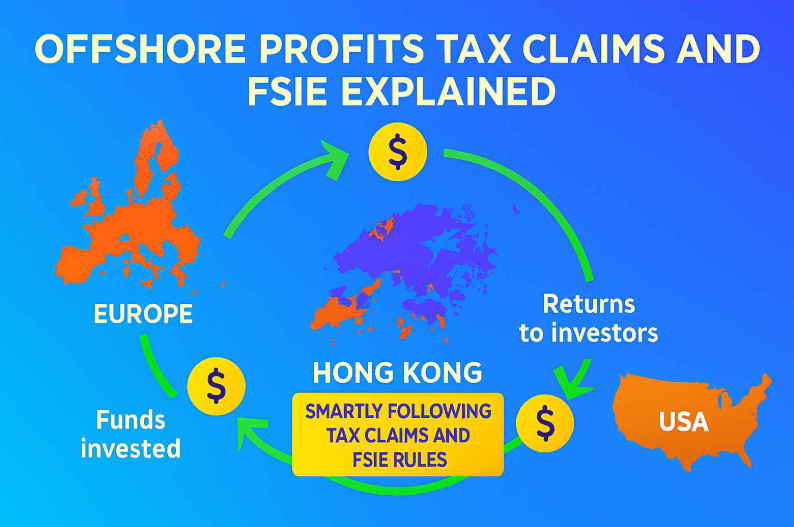
Today, the Elitestage Advisory Team breaks down the critical shifts in the 2026 tax regime and what they mean for your cross-border interests.
1 Hong Kong’s FSIE 3.0: Moving Beyond “Paper Companies”
Historically, Hong Kong was the go-to for tax-free offshore claims. However, under the 2026 FSIE 3.0 regime, the Inland Revenue Department (IRD) has moved the goalposts.
The Reality Check:
“Offshore Exemption” is no longer a passive right; it is a merit-based privilege. If your Hong Kong entity is classified as a “Pure Equity Holding Entity” or an “IP Entity” without Substantial Economic Substance (i.e., local qualified employees and physical office premises), your offshore dividends, interest, and disposal gains will be taxed at the standard 16.5% rate.
Elitestage Insight:
The IRD is now utilizing AI-driven cross-border data exchange to identify “shell” structures. In 2026, a “brass plate” address is no longer a defense—it is a red flag.
2 BEPS 2.0: Why “Small” No Longer Means “Invisible”

While the 15% global minimum tax (Pillar Two) primarily targets “MNE Groups” with revenues exceeding EUR 750 million, the “Trickle-Down Effect” is hitting SMEs in 2026.
2026 Key Trends:
● Supply Chain Due Diligence: Major multinational corporations now require their Tier 1 and Tier 2 suppliers to provide a Tax Residency Certificate (CoR) and proof of “Pillar Two” compliance to mitigate their own group-level tax risks.
● The Death of Zero-Tax Arbitrage: As Singapore and Hong Kong implement the Domestic Minimum Top-up Tax (DTT), the strategic advantage has shifted from “tax avoidance” to “tax treaty optimization.”
Elitestage Warning:
If your structure relies on zero-tax jurisdictions (like BVI or Cayman) without a solid DTA (Double Taxation Agreement) network, you are increasingly likely to face withholding tax leakages that could erode up to 30% of your cross-border cash flow.
3 Strategic Roadmap: Three Pillars of 2026 Governance

To remain competitive in this “hyper-transparent” environment, Elitestage recommends a shift in strategy:
01. Onshoring Your Substance
Migrate from “Zero-Tax Islands” to “Mid-Shore Hubs” like Hong Kong or Singapore. By establishing real substance—hiring local talent and investing in local operations—you not only secure tax exemptions but also gain access to world-class banking and legal ecosystems.
02. Leveraging the “Patent Box”
In 2026, Hong Kong’s Patent Box tax incentive offers a concessionary rate of as low as 5% for eligible IP income. This is a legitimate, OECD-compliant way to optimize your tax bill while protecting your intellectual property.
03. Residency & Wealth Convergence
Align your personal tax residency with your corporate substance. Utilizing the Hong Kong Top Talent Pass (TTPS) or Singapore’s Family Office (VCC) structures allows for a seamless integration of “Global Mobility” and “Tax Efficiency.”
“In 2026, compliance is not a cost—it is a competitive advantage. In a world without shadows, the most robust structures are those built on transparency and genuine commercial logic.”
Elitestage is a premier global advisory firm specializing in cross-border tax governance, corporate restructuring, and identity planning. We provide “concierge-level” services for international entrepreneurs navigating the complexities of Hong Kong, Singapore, and beyond.
We don’t just process paperwork; we design the compliant architecture for your global legacy.